
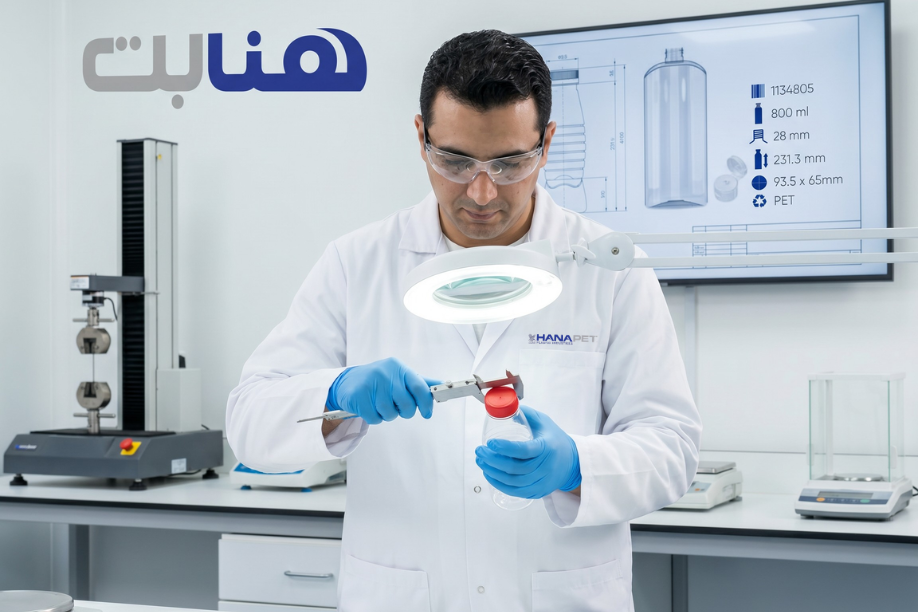
Safety Is Not an Option — It’s an Industrial Necessity
Safety standards in plastic packaging manufacturing form the foundation of any factory operating in the food, healthcare, pharmaceutical, chemical, or agricultural sectors.
Packaging is not merely an outer container; it is a direct component in the product protection system, ensuring safety until it reaches the end consumer.
Any failure to apply proper safety standards can negatively affect product quality and expose the brand to serious legal and marketing risks.
With the advancement of modern industries, safety has become an integral part of a manufacturer’s identity—especially with strict regulatory requirements and increasing consumer awareness regarding safe packaging.
? Choose safety for your products and give your customers greater confidence — contact HANA PET today at +963 948 888 159 to learn about the best packaging options for your products.
Choosing the Right Raw Material
Safety standards in plastic packaging manufacturing begin with selecting the appropriate raw material.
Polyethylene Terephthalate (PET) is one of the most widely used materials in food and pharmaceutical packaging due to its:
- High mechanical strength
- Lightweight nature
- Excellent transparency
- Recyclability
Most importantly, PET is approved for direct contact with food and pharmaceuticals by international regulatory authorities, making it a reliable choice when manufactured according to proper technical standards.
Production Environment and Air Purity
Safety is not limited to material selection—it extends to the manufacturing environment. In food and pharmaceutical industries, the purity of compressed air used in blowing processes is critical in preventing internal contamination of packaging.
Using air compliant with ISO 8573 (2-4-1) standards ensures:
- Oil-free air
- Reduced solid particles
- Controlled moisture levels
This protects the packaging from contaminants that could later affect product safety.
✨ For high-quality cosmetic packaging with professional designs and competitive prices in Syria, contact HANA PET at +963 948 888 159 and receive a free consultation to choose the most suitable packaging for your product.
Manufacturing Technology and Its Impact on Safety
The technology used in production directly affects safety levels. Implementing Injection Stretch Blow Molding (ISBM) technology allows bottles to be produced in a fully integrated single cycle without transferring semi-finished products between multiple stages.
Advantages of this technology include:
- Reduced contamination risk
- Uniform wall thickness
- More precise material distribution
- Improved resistance to impact and pressure
Compliance with Specifications and Regulations
Adhering to technical specifications and local and international regulations is not optional—it is both a legal and marketing necessity. Packaging must comply with the specific requirements of each sector, whether food, pharmaceutical, or chemical.
Manufacturers committed to global standards provide their clients with:
- Higher trust
- Easier export opportunities
- A clear competitive advantage in local and global markets
Resistance to Chemical Interaction
In sectors such as detergents, disinfectants, and chemical products, packaging must resist interaction with its contents.
PET packaging is known for its ability to withstand many liquids without affecting its properties or compromising product safety.
Choosing unsuitable packaging may result in:
- Bottle deformation
- Structural weakness
- Altered product characteristics
- Financial losses and reputational damage
Engineering Design Precision
The engineering design of packaging directly impacts safety levels. Key elements include:
- Wall thickness
- Neck diameter
- Closure system
Any defect in these elements may cause leakage or weak sealing. Providing multiple neck finishes and precise dimensions ensures compatibility with different closure systems and prevents issues during transport and storage.
Sector-Specific Safety Requirements
Safety standards in plastic packaging manufacturing vary depending on the sector:
- Food: Prevent contamination and extend shelf life
- Pharmaceutical: Highest levels of sterilization and compliance
- Cosmetic: Purity and clarity
- Chemical & Agricultural: Durability and high resistance
The ability to meet these diverse requirements reflects industrial expertise and a deep understanding of market needs.
Testing and Quality Control
Core safety tests include:
- Wall thickness testing
- Pressure resistance testing
- Impact resistance testing
- Leakage testing
An internal quality control system ensures any defect is detected before packaging reaches the client, protecting filling lines and markets from future issues.
Sustainability and Environmental Responsibility
Sustainability has become part of the modern safety concept. Using recyclable materials such as PET reduces environmental impact and reflects industrial commitment and social responsibility.
Companies that adopt sustainable packaging solutions strengthen their brand image and meet the expectations of modern markets.
Long-Term Partnership with the Supplier
Choosing a packaging supplier committed to long-term quality and safety standards provides manufacturers with:
- Operational stability
- Continuous technical support
- Customized solutions for production lines
A trusted supplier does not merely provide packaging—it delivers industrial expertise that protects product quality and brand reputation.
Safety Is the Foundation of Industrial Success
Safety in plastic packaging manufacturing starts with raw material selection, passes through a clean production environment, advanced manufacturing technologies, strict compliance with specifications, and extends to quality testing and sustainability.
Every step in this chain contributes to protecting the product, building trust, and ensuring long-term continuity.
Frequently Asked Questions (FAQ)
1. Is PET safe for food and pharmaceutical use?
Yes. When manufactured according to approved technical standards, PET is safe for direct contact with food and pharmaceutical products.
2. What is the importance of ISO 8573 in packaging manufacturing?
It defines compressed air purity levels used in industrial processes and prevents contamination inside packaging.
3. Why is ISBM technology considered safer?
Because it produces packaging in a single stage, reducing contamination risk and improving wall thickness consistency.
4. Do safety standards differ by sector?
Yes. Requirements vary between food, pharmaceutical, cosmetic, and chemical sectors.
5. How can I ensure my packaging supplier complies with safety standards?
By verifying the use of certified materials, modern technologies, and a clear internal quality control system.
Company Information
Administration:
Damascus – Baramkeh – Free Zone
Building 3056
? Phone: +963 11 2130800
? Phone: +963 11 2132110
? Mobile: +963 948 888 159
? info@hana-pet.net
Factory:
Rural Damascus – Al-Saboura
Building 8056
? Phone: +963 11 3934613
CTA
Are you looking for safe plastic packaging that complies with international standards and suits your industrial sector?
Contact us for reliable packaging solutions that support your product quality and business continuity.
? +963 948 888 159
? info@hana-pet.net
HANA PET – Industrial Expertise in PET Packaging Manufacturing According to the Highest Safety and Quality Standards.
 English
  Arabic