

How to Ensure Packaging Compatibility with Your Filling Line
Compatibility is not a technical detail; it is an element of operational stability
How to ensure packaging compatibility with your filling line?
This question is pivotal to the efficiency of any factory operating in the food, health, pharmaceutical, chemical, or agricultural sectors. A package may be of high quality in terms of material or design, but if it is not precisely matched to the filling line, it quickly turns from a production‑support element into a direct cause of breakdowns and losses.
In many cases, the problem is not with the machines or the team’s efficiency, but with an element that appears simple: the package itself. Incompatibility leads to frequent stoppages, manual interventions, and constant pressure on operations and maintenance teams.
? An incompatible package does not raise its voice… but it silently drains production.
Ensuring compatibility starts with a complete understanding of the filling‑line specifications and ends only with selecting a package manufactured to strict engineering standards, using safe materials such as PET and advanced manufacturing technologies that guarantee dimensional stability and consistent forming over time.
Understanding the technical specifications of the filling line
How to ensure packaging compatibility with your filling line?
The first step is to analyze the technical specifications of the filling line, including:
- Actual operating speed
- Type of filling machine (volumetric, gravimetric, pressure‑based, etc.)
- Closing system used
- Closure type and mounting mechanism
Every machine operates within tight tolerances, especially regarding:
- Neck diameter
- Container height
- Wall thickness
- Shoulder shape and bending angle
Any minor deviation in these details can cause problems in automatic pickup, container holding during filling, or secure closure.
? A package that “almost fits the line” is a recipe for daily problems.
Safety standards in the plastic packaging industry: What should you know?
Accuracy of neck diameter and the closing system
How to ensure packaging compatibility with your filling line?
Neck diameter is one of the most sensitive elements. Closure systems—whether screw‑type or snap‑on—rely on very precise measurements. Even a slight millimeter difference can lead to:
- Leakage
- Weak closure
- Cap damage
- Wear on closure heads
Offering standard and multiple neck sizes simplifies integration with different systems and reduces the need for costly modifications to the production line.
? The perfect closure starts with a precisely designed neck, not with machine force.
Dimensional consistency across production batches
How to ensure packaging compatibility with your filling line?
Success in the first sample is not enough. The real challenge is dimensional consistency across all production batches. Variations between batches lead to sporadic breakdowns that are hard to diagnose and confuse the operations team.
Using one‑stage injection stretch blow molding (ISBM) technology achieves:
- High uniformity in wall thickness
- Stable neck diameter and overall height
- Reduced manufacturing deviations
? True quality is not quality today… it is quality every day.
Wall‑thickness uniformity and structural strength
How to ensure packaging compatibility with your filling line?
On high‑speed filling lines, containers are subjected to continuous stress during grip, conveyor movement, or fast capping. If the wall thickness is uneven, the following may occur:
- Dents
- Container fall‑over
- Shape distortion
Containers made from high‑grade PET, with a balanced wall‑thickness distribution, provide sufficient rigidity to withstand pressure without affecting stability or appearance.
⚙️ A strong structure protects not only the container… but the entire line.
Stability of the container on the conveyor belt
How to ensure packaging compatibility with your filling line?
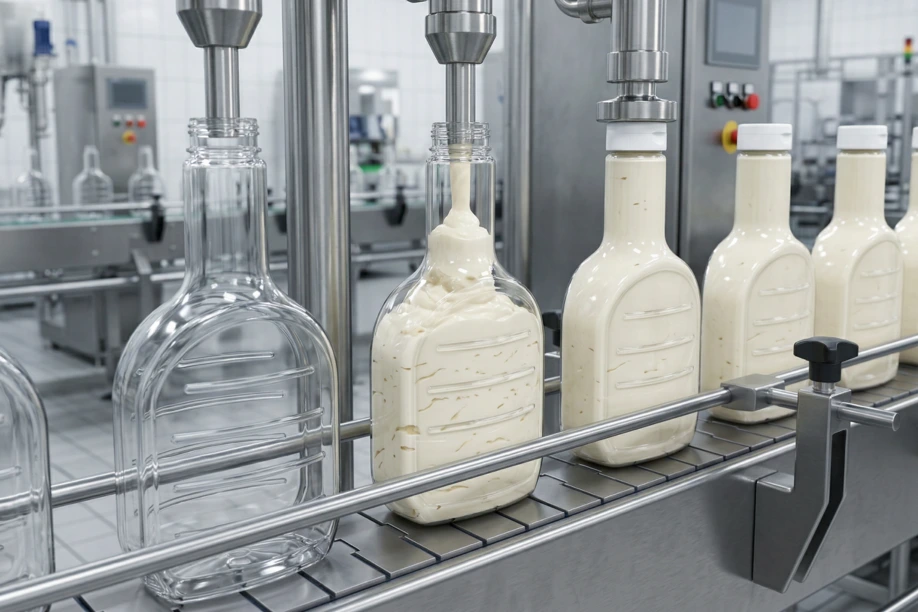
The base of the container is often overlooked, despite being fundamental to stability. An unbalanced base can cause:
- Vibration during movement
- Container tipping
- Jamming at turning points
A well‑designed, geometrically balanced base enhances stability, especially at high speeds.
? Every stable container means one step less toward an unexpected stoppage.
Accounting for the nature of the filled product
How to ensure packaging compatibility with your filling line?
The product’s nature directly affects compatibility. Products that are:
- High‑viscosity
- Chemical
- Reaction‑sensitive
may require:
- A different neck opening
- A body design that facilitates smooth flow
- Extra thickness in specific areas
PET provides excellent resistance to many liquids, but the correct design is what ensures smooth filling without spillage or splashing.
? The package must work with the product… not against it.
Performance testing before final approval
How to ensure packaging compatibility with your filling line?
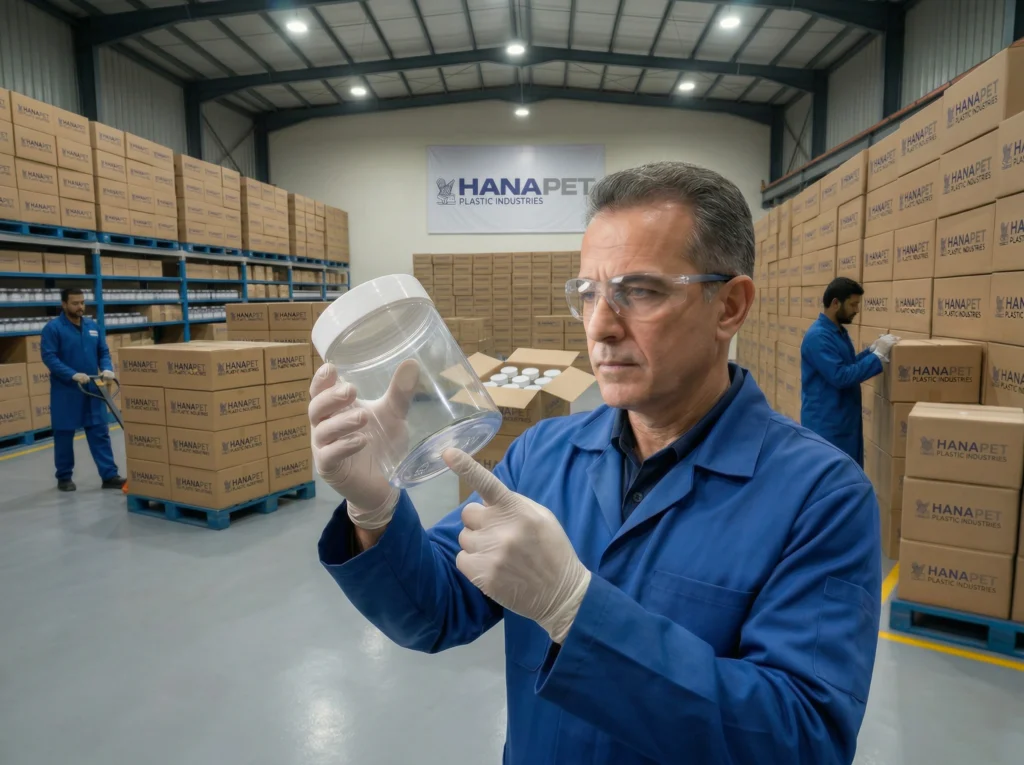
The best decision is to conduct a practical test on the actual production line before final approval. Testing reveals:
- Container behavior at operating speed
- Stability during starts and stops
- Performance during capping
This test prevents costly surprises later.
? Line‑testing is the cheapest insurance for production.
Clean production and its impact on performance
How to ensure packaging compatibility with your filling line?
Container cleanliness directly affects filling efficiency, especially in food and pharmaceutical industries. Contamination may require extra cleaning or cause closure problems.
Production in an environment that uses air compliant with ISO 8573 (2‑4‑1) reduces contaminants and maintains process stability.
? Good cleanliness shortens steps… and prevents invisible breakdowns.
Early coordination with the supplier
How to ensure packaging compatibility with your filling line?
Early communication with the container manufacturer and sharing line layouts reduces trial and error. An experienced supplier:
- Understands different line designs
- Proposes suitable solutions
- Shortens development time
Within this framework, HANA PET relies on direct technical coordination with customers to deliver PET containers compatible with various filling lines, not just generic bottles.
? A good supplier does not sell a container… they sell stability.
Planning for future expansion
How to ensure packaging compatibility with your filling line?
When choosing a container, think ahead:
- New products
- Higher speeds
- Export markets
Selecting a container with standard specifications makes future expansion easier, without redesigning or changing equipment.
? A smart container today protects you from tomorrow’s costs.
Compatibility as the foundation of stable production
How to ensure packaging compatibility with your filling line?
Through:
- Precise understanding of specifications
- Accurate dimensional selection
- Reliance on technologies such as ISBM
- Practical line tests
- A genuine partnership with the supplier
Compatibility is not a cosmetic detail; it is a core element of stable production, reduced breakdowns, and lower waste. A container that is geometrically compatible and manufactured from high‑quality PET ensures smooth operation and daily confidence in your filling line.
Frequently asked questions (FAQ)
- What is the most important factor in packaging‑to‑line compatibility?
Neck diameter accuracy and its match with the closure system. - Can incompatibility be detected before mass production?
Yes, through a practical test on the filling line. - Does the manufacturing technology affect compatibility?
Yes, technologies such as ISBM guarantee dimensional stability. - Does the bottle base shape affect performance?
Significantly; a balanced base is essential for stability. - How do I choose the right supplier?
A supplier that commits to standards and understands different production lines.
Company information
Management:
Damascus – Al‑Baramkeh – Free Zone
Plot 3056
? 00963 11 2130800
? 00963 11 2132110
? 00963 948 888 159
? info@hana‑pet.net
Factory:
Rural Damascus – Al‑Saboura
Plot 8056
? 00963 11 3934613
Call to action (CTA)
Do you suffer from breakdowns or stoppages due to package incompatibility with your filling line?
Contact us today to obtain precisely designed PET containers that are compatible with your production lines and support stable operation.
? 00963 948 888 159
? info@hana‑pet.net
HANA PET – PET containers with engineering‑grade quality that support stable production.
 English
  Arabic